
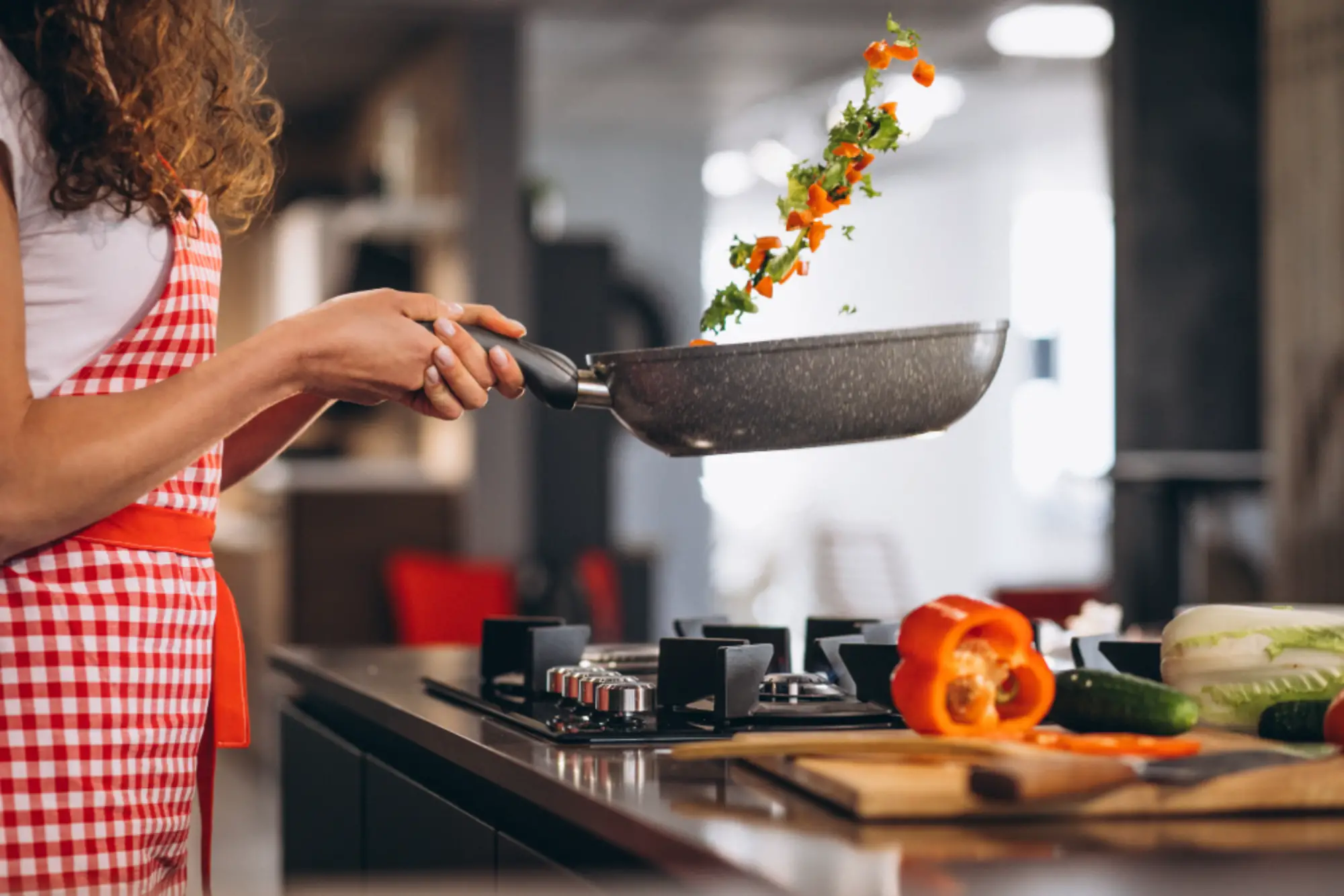
Professional cooking requires advanced tools that allow maximum flexibility and efficiency in cooking. A 6-burner oven represents a perfect solution for large families, cooking enthusiasts and professional kitchens that need high output and complete control over the cooking process. Unlike conventional 4-burner cooking ovens, a professional 6-burner kitchen oven opens up a whole world of culinary possibilities.
The Basics of Cooking with Flames
Cooking with flames is not just an impressive show, it is a real tool that dramatically changes the texture, taste and appearance of food. The direct flame creates complex chemical reactions in food, such as the Maillard process, which gives dishes a depth of flavor that cannot be achieved in a regular cooking oven or with conventional cooking methods.
The controlled use of flames at a height of about 6 inches allows for:
Precise control of heat intensity and exposure
Creating a crispy outer crust while maintaining internal moisture
Giving dishes a unique aroma
Possibility of rapid cooking
Basic techniques for cooking with flames
The most basic technique is direct burning, in which the flame is moved over the food in controlled movements. The movement should be constant and consistent to prevent overburning of certain parts. It is important to remember that the goal is to create a thin and delicious crust layer, not to burn the food completely.
Another technique is cooking using the “kissing” method – in which the flame touches the food for a very short time, creating local burning points that provide nuances of flavor. This method is particularly suitable for delicate foods such as fish or soft vegetables.
Diverse culinary applications
The world of desserts offers a rich field of action for these techniques. Caramel brulee is the most classic example, where the flame melts and caramelizes the top layer of sugar, creating a perfect contrast between crispness and creaminess. But the possibilities extend far beyond that:
Burning a marshmallow topping on a pie or tart
Directly caramelizing fruits such as bananas or peaches
Creating a molten crust on soft cheeses
Giving a smoky hue to creams and sorbets
In the field of savory dishes, the technique proves revolutionary. Meats are perfectly sealed, locking in the juices while creating an aromatic crust on the outside. Delicate fish benefit from rapid heating that cooks the outer layer while maintaining the softness on the inside.
Safety and control
Working with flames requires a deep understanding of safety principles. The environment must be free of flammable materials, and the kitchen should be well ventilated. It is important to always make sure that extinguishing agents are available, such as a fire blanket or a suitable fire extinguisher.
Controlling the flame intensity is the key to success:
Low flame – for gentle and controlled heating
Medium flame – for caramelization and searing
High flame – for rapid burning and crust formation
The angle at which you hold the device affects the final result. A 45-degree angle provides even heat distribution, while a straight angle creates a more concentrated heat spot.
Recommended tools and equipment
Choosing the right tools is critical to success. Professional butane burners provide precise control and high reliability. A professional kitchen stove that combines built-in flame capabilities allows for a perfect and safer cooking experience. It is important to choose devices with a safety locking mechanism and an adjustable pressure regulating valve.
Other equipment to have:
Heat-resistant work surfaces
Long tongs for handling hot materials
Infrared thermometer for measuring temperatures
Heat-resistant gloves for when needed
The science behind the technique
Understanding the science behind flame cooking enriches your ability to achieve perfect results. The Maillard process, which occurs at temperatures of 140-165 degrees Celsius, is responsible for the brown colors and complex flavors that develop when proteins and sugars meet high heat.
Caramelization, on the other hand, begins at higher temperatures and changes the molecular structure of the sugar, creating deep, sweet flavors. Understanding these processes allows for more precise control over the final result.
Beginner Tips
Begin your journey with flame cooking requires patience and constant practice. It is recommended to start with simple foods such as sugar for crème brûlée or caramelizing hard fruits. Practicing with these materials allows you to develop a feel for the intensity of heat and the times required.
It is important to remember that mistakes are part of the process:
Start with low flames to prevent burning
Practice on dishes that are not expensive or complex
Documenting the results for future learning
Consulting with experienced kitchens
Summary
The world of cooking with flames continues to evolve with the introduction of new technologies. Smart burners with digital temperature control are starting to appear on the market, as is an advanced 6-burner oven that combines several cooking technologies in one appliance, allowing for greater precision and consistent reproducibility of results.
The trend of molecular cooking also incorporates advanced flame techniques, creating dishes that combine science and art. These techniques allow for the creation of textures and flavors that were not possible before.
Cooking with flames is more than just a technique – it is a means of culinary expression that allows kitchens to discover new dimensions in cooking. With the right tools, the right knowledge, and constant practice, anyone can master the power of flames and turn them into a creative partner in the kitchen.